
Dental Crowns Etobicoke: Fast, Durable Tooth Protection
July 6, 2026
Does Invisalign Hurt? What to Expect & 7 Ways to Ease Pain
June 12, 2026
Metal Braces vs Invisalign: Which Orthodontic Treatment Is Right for You?
Everything Etobicoke patients need to know before choosing between traditional braces and clear aligners for a straighter, healthier smile.
Deciding between metal braces and Invisalign is one of the biggest choices you’ll make on the path to a straighter smile. Both treatments correct misalignment, close gaps, and fix bite issues, but they work in fundamentally different ways. The right option depends on your specific dental needs, your daily routine, and your personal preferences.
At Sherway Trillium Dental in Etobicoke, we’re a Platinum Invisalign Provider and experienced in traditional braces, so we’ve helped hundreds of patients make this exact decision. This guide walks you through every factor that matters, from aesthetics and comfort to cost and long-term results, so you can make a confident, informed choice.
Why Orthodontic Treatment Matters for More Than Just Looks
Many people think of orthodontics as a purely cosmetic procedure. While a straight smile certainly boosts confidence, the health benefits go much further than appearance. Misaligned teeth and bite problems can contribute to a range of oral and overall health issues if left untreated.
Health Reasons to Consider Braces or Invisalign
- Reduced risk of tooth decay: Crowded or overlapping teeth create hard-to-clean pockets where bacteria and plaque accumulate, increasing the chance of cavities. Regular dental cleanings help, but properly aligned teeth are easier to maintain.
- Healthier gums: Teeth that are too tightly spaced or widely gapped make gums more vulnerable to periodontal disease. Straight teeth allow gum tissue to fit more snugly, reducing inflammation.
- Better chewing and digestion: When your bite is properly aligned, you chew food more efficiently, which actually supports better digestion.
- Less jaw pain and headaches: Bite issues like overbites, underbites, and crossbites can strain the jaw joint (TMJ), leading to chronic pain, headaches, and even earaches.
- Protection against tooth wear: Misaligned teeth don’t distribute biting force evenly, which can cause premature enamel erosion and chipping.
Whether you’re considering treatment for yourself, your teenager, or your child, the long-term payoff of orthodontic care goes well beyond cosmetics. It’s an investment in lasting oral health.
Understanding Metal Braces: How They Work

Metal braces are the most well-known orthodontic treatment, and they’ve been around for decades. Despite the rise of clear aligners, traditional braces remain the gold standard for correcting complex dental issues.
How Metal Braces Straighten Teeth
Metal braces consist of three main components: stainless steel brackets bonded to each tooth, an archwire that connects the brackets, and small elastic bands (ligatures) that hold the wire in place. Your orthodontist periodically tightens or replaces the archwire, which applies steady pressure to gradually move teeth into their correct positions.
Conditions Metal Braces Treat Best
- Severe crowding or overlapping teeth
- Complex bite problems (overbite, underbite, crossbite, open bite)
- Large gaps between teeth
- Rotated or tilted teeth requiring significant movement
- Cases requiring tooth extraction and space closure
Because braces are fixed to your teeth 24 hours a day, they provide constant, uninterrupted force. There’s no risk of forgetting to wear them or accidentally losing an aligner. For patients who need significant tooth movement or have complicated bite corrections, this consistency is a real advantage.
At Sherway Trillium Dental, our orthodontic team in Etobicoke customizes every braces treatment plan to address your specific alignment goals. Modern brackets are smaller and more comfortable than the ones you might remember from years ago.
Understanding Invisalign Clear Aligners
Invisalign has transformed how millions of people straighten their teeth. Instead of brackets and wires, Invisalign uses a series of custom-made, transparent plastic trays (aligners) that gradually shift teeth into place. Each set of aligners is worn for one to two weeks before being swapped for the next set in the series.
How Invisalign Works Step by Step
- Digital scanning: Your orthodontist takes a 3D scan of your teeth using an iTero scanner. At Sherway Trillium Dental, we use this advanced technology to map out your entire treatment before it begins.
- Custom treatment plan: Using the scan data, a detailed digital model predicts exactly how your teeth will move at each stage.
- Aligner fabrication: A complete series of custom aligners is manufactured specifically for your teeth.
- Wear and progress: You wear each set of aligners for 20 to 22 hours per day, removing them only to eat, drink (anything other than water), brush, and floss.
- Regular checkups: You visit our Etobicoke clinic every few weeks so we can monitor progress and provide your next sets of aligners.
Conditions Invisalign Treats Effectively
- Mild to moderate crowding
- Gaps between teeth
- Overbite and underbite (mild to moderate)
- Crossbite corrections
- Teeth that have relapsed after previous orthodontic treatment
As a Platinum Invisalign Provider, Sherway Trillium Dental has the experience and advanced training needed to handle both straightforward and more complex Invisalign treatments in Etobicoke. This designation means we treat a high volume of Invisalign cases annually with consistently successful outcomes.
Appearance and Aesthetics: A Side-by-Side Comparison
For many patients, especially adults and working professionals, appearance during treatment is a top concern. Here’s how the two options stack up.
| Factor | Metal Braces | Invisalign |
|---|---|---|
| Visibility | Highly visible metal brackets and wires | Nearly invisible clear plastic trays |
| Customization | Colorful elastic bands for personalization | Transparent; no visible customization needed |
| Photo-readiness | Noticeable in photos and video calls | Virtually undetectable in photos |
| Professional settings | May cause self-consciousness at work | Discreet enough for client-facing roles |
If keeping your orthodontic treatment private is important to you, Invisalign has a clear advantage. The aligners are transparent and fit snugly over your teeth, making them virtually undetectable during conversations, meetings, and social events.
That said, metal braces have come a long way. Today’s brackets are smaller and less bulky than older versions. Younger patients often enjoy choosing colorful bands to express their personality, turning braces into a fashion statement rather than something to hide.
Comfort and Daily Life: What to Expect
Metal Braces and Comfort
Metal braces require an adjustment period. During the first week and after each tightening appointment, you’ll likely feel pressure and mild soreness as your teeth begin to shift. The brackets and wires can also irritate the inside of your cheeks and lips, though dental wax provides quick relief.
Food restrictions are one of the biggest lifestyle adjustments with braces. You’ll need to avoid:
- Hard foods like popcorn kernels, nuts, and hard candy
- Sticky foods like caramel, taffy, and chewing gum
- Crunchy foods that could snap a wire, like raw carrots or apples (unless cut into small pieces)
Invisalign and Comfort
Invisalign aligners are made from smooth, BPA-free plastic, so there are no brackets or wires to irritate your mouth. You’ll feel some pressure when you switch to a new set of aligners (this means they’re working), but the discomfort is generally milder than what braces produce after a tightening.
Because the aligners are removable, there are no food restrictions at all. You simply take them out before eating and put them back in when you’re done. This is a major advantage for patients who don’t want to change their diet.
The Discipline Factor
Here’s where honesty matters: Invisalign demands discipline. You must wear your aligners for 20 to 22 hours every day. Taking them out too often or forgetting to put them back in after meals will slow your progress and potentially compromise your results. Metal braces, on the other hand, work around the clock without requiring any effort on your part. If you’re choosing treatment for a child or teen who might struggle with this responsibility, that’s worth discussing with your orthodontist.
Treatment Duration: How Long Will It Take?
Treatment time varies based on the complexity of each case, but here are general timelines:
Metal Braces
18 to 24 months
Best for complex cases. Braces work continuously, and your orthodontist has precise control over tooth movement at each adjustment visit.
Invisalign
12 to 18 months
Ideal for mild to moderate cases. Consistent wear is essential. Skipping hours or days can extend treatment significantly.
Some straightforward Invisalign cases can be completed in as few as six months, while severe orthodontic issues treated with braces may take up to 30 months. The only way to get an accurate estimate is through a professional orthodontic assessment.
At Sherway Trillium Dental, we offer free orthodontic consultations where our team evaluates your teeth, discusses your goals, and provides a realistic treatment timeline for both options.
Cost Comparison: Metal Braces vs Invisalign
Budget is understandably one of the first things patients ask about. Here’s what to expect in terms of cost.
Metal Braces Pricing
Traditional metal braces are generally the more affordable option upfront. The cost varies depending on the severity of your case and the length of treatment, but they tend to fall on the lower end of the orthodontic price range.
Invisalign Pricing
Invisalign treatment typically costs slightly more than metal braces due to the advanced digital technology, custom aligner fabrication, and the lab fees associated with each new set of trays. However, the gap in pricing has narrowed considerably in recent years.
Factors That Affect the Final Cost
- Case complexity: More severe alignment issues require longer treatment and more materials.
- Treatment length: Longer treatment means more appointments and more aligner sets.
- Retainers: Both treatments require retainers afterward. This cost should be factored into your total investment.
- Insurance coverage: Many dental plans cover a portion of orthodontic treatment. Our team at Sherway Trillium Dental handles direct insurance billing to simplify the process.
Flexible Payment Options
We believe cost shouldn’t prevent anyone from getting the smile they deserve. Sherway Trillium Dental offers flexible payment plans to make both metal braces and Invisalign more accessible. During your free consultation, we’ll discuss insurance benefits, payment options, and provide a transparent cost breakdown with no surprises.
Effectiveness for Different Dental Conditions
Both treatments straighten teeth, but each has strengths depending on your specific condition.
| Dental Condition | Metal Braces | Invisalign |
|---|---|---|
| Mild crowding | ✅ Effective | ✅ Highly effective |
| Severe crowding | ✅ Highly effective | ⚠️ May need attachments |
| Gaps between teeth | ✅ Effective | ✅ Highly effective |
| Overbite | ✅ Highly effective | ✅ Effective (mild–moderate) |
| Underbite | ✅ Highly effective | ⚠️ Limited for severe cases |
| Crossbite | ✅ Highly effective | ✅ Effective |
| Open bite | ✅ Highly effective | ⚠️ Case-dependent |
| Rotated teeth | ✅ Highly effective | ⚠️ Challenging for severe rotation |
Metal braces have an edge when it comes to complex movements, particularly severe rotations, vertical corrections, and cases requiring extraction space closure. Invisalign continues to expand its capabilities and now treats many conditions that were previously only manageable with braces, especially when combined with attachments (small tooth-colored bumps placed on teeth to help aligners grip better).
In some cases, a combination approach works best. A patient might start with braces for heavy-duty corrections and then switch to Invisalign to fine-tune the final alignment. Our Etobicoke orthodontic team will recommend the most effective path for your unique situation.
Oral Hygiene During Treatment: Keeping Teeth Healthy
No matter which treatment you choose, maintaining excellent oral hygiene during orthodontics is essential. Straight teeth won’t mean much if you end up with cavities or gum disease along the way.
Brushing and Flossing with Metal Braces
Braces create many small spaces where food particles and plaque can hide. You’ll need to:
- Brush after every meal using a soft-bristled toothbrush or an orthodontic brush
- Use a floss threader or water flosser to clean between teeth and under wires
- Rinse with fluoride mouthwash daily
- Attend regular dental cleanings every six months (or more frequently if recommended)
Brushing and Flossing with Invisalign
Oral hygiene is significantly easier with Invisalign because the aligners are removable. Your routine looks almost identical to normal:
- Remove aligners before eating or drinking anything other than water
- Brush and floss your teeth before putting aligners back in
- Rinse your aligners regularly and clean them with a soft toothbrush
- Never eat or drink hot beverages with aligners in (heat can warp the plastic)
This ease of cleaning is one of the biggest practical advantages of Invisalign. Patients who are prone to cavities or who have a history of gum problems may find it easier to maintain their oral health with removable aligners.
Best Choice by Age Group
Children (Ages 7–12)
Early orthodontic assessment is recommended by age seven. For children who need treatment at this stage, metal braces are usually the preferred option. Young children generally lack the discipline required to wear Invisalign consistently, and braces provide reliable, round-the-clock correction. If your child shows signs of crowding, jaw misalignment, or bite issues, a visit to our pediatric dentistry team is a great first step.
Teenagers (Ages 13–19)
Both options work well for teens. Metal braces are ideal for complex cases, while Invisalign Teen offers the aesthetic advantage of clear aligners with built-in compliance indicators. The choice often comes down to your teen’s lifestyle and responsibility level. Sports-minded teens may prefer Invisalign since there’s no risk of cutting the inside of the mouth from brackets during physical activity.
Adults (20+)
Adults are the fastest-growing group of orthodontic patients, and the majority lean toward Invisalign for its discretion and convenience. However, adults with severe misalignment or complex bite issues may still benefit more from the precise control of metal braces. There’s absolutely no age limit for orthodontic treatment. We regularly treat patients in their 40s, 50s, and beyond.
What Happens After Treatment: Retainers and Long-Term Care
Finishing braces or Invisalign is a milestone worth celebrating, but your orthodontic journey doesn’t end there. Without proper retention, teeth can gradually shift back toward their original positions. This is called orthodontic relapse, and it happens to nearly everyone who skips retainer wear.
Types of Retainers
- Fixed retainers: A thin wire bonded behind your front teeth. It stays in place permanently and requires no daily effort.
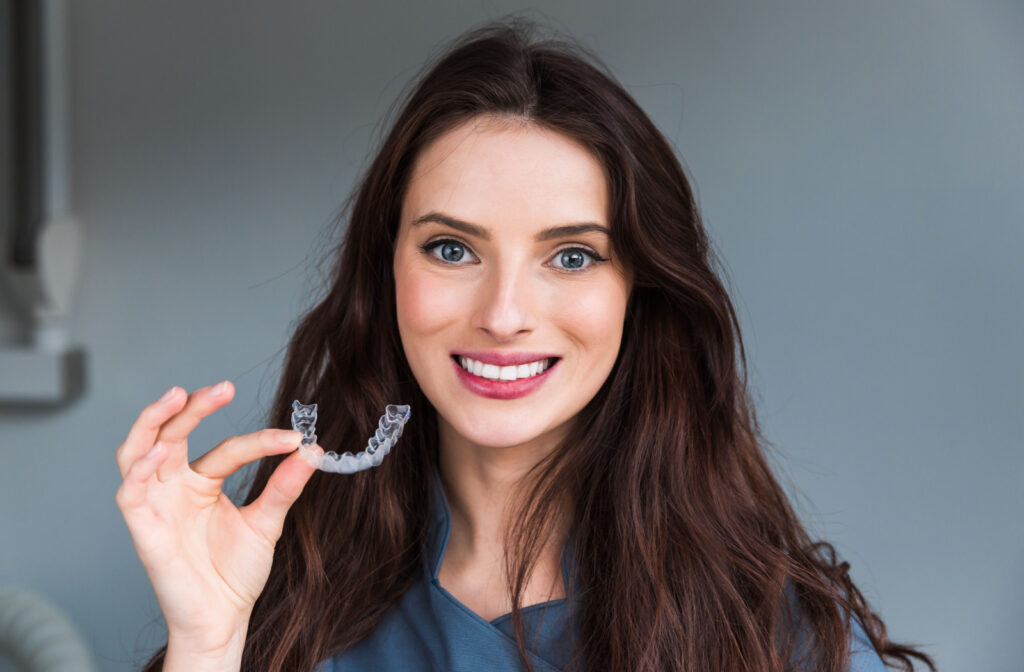
- Removable retainers: Custom-made clear trays (similar to Invisalign) or Hawley retainers with a wire and acrylic base. You’ll typically wear these full-time for the first few months, then transition to nighttime-only wear.
At Sherway Trillium Dental, we provide custom retainers as part of your treatment plan and give you clear guidance on how long and how often to wear them. Protecting your investment in a straight smile starts with following your retainer schedule.
Regular dental visits for cleanings and checkups also help us monitor your alignment over time and catch any shifting early.
How Orthodontics Connects to Your Overall Dental Health
Straightening your teeth isn’t an isolated procedure. It’s part of a bigger picture that includes your entire oral health. At Sherway Trillium Dental, we take a comprehensive approach, making sure your orthodontic treatment works in harmony with your other dental needs.
For example:
- If you have an infected tooth, a root canal treatment may be needed before orthodontic work begins to ensure you’re starting with a healthy foundation.
- Missing teeth? Tooth replacement options like dental implants or bridges are often coordinated with orthodontic treatment to achieve the best functional and aesthetic result.
- If you’re interested in cosmetic dental treatments like veneers or whitening, these are typically done after orthodontics so the final results look their absolute best.
- Wisdom teeth or other extractions may need to happen before or during treatment. Our dental surgery team works closely with our orthodontists to coordinate your care.
And if you ever experience a dental emergency during treatment, like a broken bracket, lost aligner, or sudden tooth pain, our emergency dental care team is available for same-day appointments and walk-ins.
Why Choose Sherway Trillium Dental for Braces or Invisalign in Etobicoke
Choosing where to get orthodontic treatment is just as important as choosing which treatment. Here’s what sets Sherway Trillium Dental apart:
🏅 Platinum Invisalign Provider
This designation reflects our extensive experience and consistently successful Invisalign outcomes. We treat a high volume of cases every year.
🦷 In-House Specialists
Our clinic has orthodontists, periodontists, and endodontists on staff. You don’t need referrals to outside offices.
📸 iTero Digital Scanning
No messy impressions. Our iTero scanner creates precise 3D models of your teeth for accurate treatment planning.
💳 Direct Insurance Billing
We bill your insurance directly, reducing paperwork and out-of-pocket hassle.
🅿️ Free Validated Parking
Convenient access with free parking at our Etobicoke location, right near Sherway Gardens.
😌 Comfort-First Approach
Nitrous oxide (laughing gas) is available for patients who feel anxious about dental procedures.
Ready to Find Out Which Treatment Is Right for You?
The best way to decide between metal braces and Invisalign is to talk to an orthodontic specialist who can evaluate your specific situation. At Sherway Trillium Dental, we offer free orthodontic consultations that include a full assessment, digital scanning, and a personalized treatment recommendation.
Whether you’re looking for a discreet way to straighten your teeth or need comprehensive bite correction, we’ll guide you toward the option that fits your life, your goals, and your budget.
Book Your Free ConsultationExplore Our Orthodontic Services
Frequently Asked Questions About Metal Braces and Invisalign
How long does Invisalign treatment take compared to metal braces?
Invisalign treatment typically takes 12 to 18 months for most cases, while metal braces usually require 18 to 24 months. However, treatment duration depends on the complexity of your orthodontic issues. Severe misalignment or bite problems may extend the timeline for either option. Your orthodontist at Sherway Trillium Dental will provide a personalized estimate after evaluating your teeth.
Can I switch from metal braces to Invisalign mid-treatment?
In some cases, yes. If your teeth have progressed enough with braces, your orthodontist may recommend transitioning to Invisalign clear aligners to finish the remaining adjustments. This is evaluated on a case-by-case basis. Schedule a consultation at Sherway Trillium Dental in Etobicoke to discuss whether switching is possible for your situation.
Are metal braces or Invisalign better for teenagers?
Both work well for teenagers. Metal braces are often recommended for complex cases or for teens who may forget to wear removable aligners consistently. Invisalign Teen is specifically designed for younger patients and includes compliance indicators to track wear time. The best choice depends on your teen’s orthodontic needs, maturity level, and lifestyle preferences. Our children’s and teen dentistry team can help guide you.
What are the signs I need orthodontic treatment?
Common signs include crowded or overlapping teeth, noticeable gaps between teeth, difficulty chewing or biting, jaw pain or clicking, an overbite or underbite, and teeth that don’t meet properly when you close your mouth. If you experience any of these, an orthodontic assessment can determine whether braces or Invisalign is the right treatment for you.


